What The $36M GE Aerospace ITAR Settlement Signals For Defense Exporters
Authorization gaps, ITAR/EAR confusion, technical data controls, and registration failures rarely stay isolated. Left unchecked, they can compound across programs, parties, systems, and years before a company realizes its export compliance posture is exposed.
Access The Analysis


Executive summary
The GE Aerospace Consent Agreement gives defense exporters a detailed look at how ITAR compliance failures can build across authorizations, technical data controls, classification decisions, logistics processes, and DDTC registration obligations.
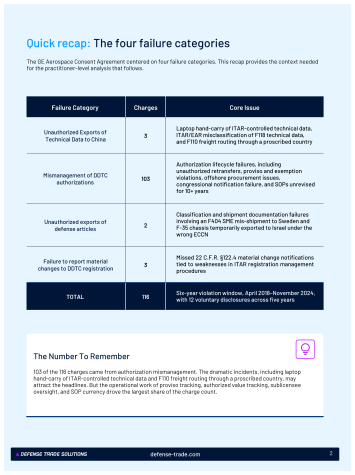
The headline numbers are significant. But the deeper issue is what the 116 violations reveal about how compliance failures can compound across programs, systems, parties, and years. Most notably, 103 of the 116 charges came from authorization mismanagement, the kind of operational exposure that can build quietly inside export programs.
DTS created this practitioner analysis to translate the Consent Agreement into mid-market risk, DDTC signals, and a practical scorecard for evaluating export compliance posture.

What’s inside the analysis
This companion piece gives you the practitioner-level read behind the GE Aerospace Consent Agreement, including:
- A concise recap of the four failure categories behind the 116 ITAR violations
- A mid-market translation of how those risks can show up at a $50M–$500M exporter
- Seven DDTC signals embedded in the Consent Agreement
- A 12-question compliance posture scorecard to pressure-test your own program
- Practical control levers to review before gaps become enforcement issues
If your team touches ITAR, this analysis is built for you
- Defense exporters managing ITAR-controlled articles, technical data, or defense services
- Global trade, export compliance, and legal teams
- Program leaders supporting international defense work
- Mid-market companies moving from commercial or dual-use activity into defense
- Executives who need a practical read on enforcement exposure and compliance posture
Read the agreement like a practitioner
DTS helps defense exporters translate charging letters and consent agreements into stronger authorization management, ITAR/EAR compliance, classification controls, technology controls, logistics processes, and DDTC registration practices.
Use the GE Aerospace analysis to understand what DDTC may be signaling and where your own program may have exposure.
Prepared by Defense Trade Solutions for client education purposes. This analysis does not constitute legal advice.
Download The Practitioner Read