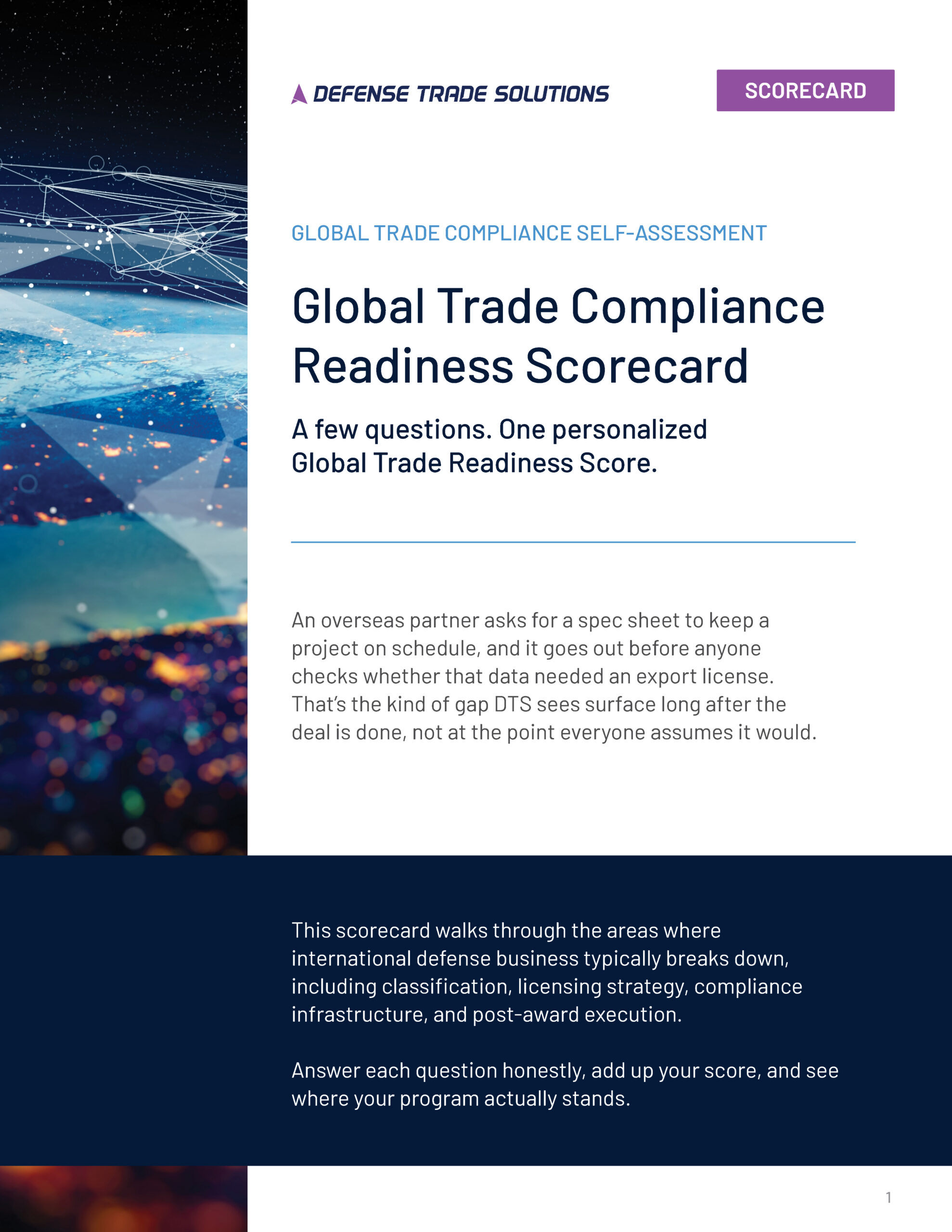
Self-Assessment / Global Trade Readiness
A ten-minute gut check on the systems most defense exporters assume are solid, covering classification, licensing, and compliance infrastructure. Answer honestly, tally your score, and see exactly where you stand.
$2B+
In penalties mitigated
$3B+
In export markets opened
43+
Direct relationships with U.S. government offices
150+ years
DTS staff experience
Most trade compliance programs are built piece by piece. A screening process gets added. A classification step is documented. A training update arrives the moment someone flags a gap. Each piece can hold up fine on its own. What usually doesn't hold up is the space between them, where classification, licensing, and screening are supposed to connect and don't.
That gap matters more now than it used to. DDTC enforcement has picked up. Consent agreements are becoming more common. In the GE Aerospace consent agreement alone, 103 of the 116 charges traced back to authorization mismanagement, the kind of operational exposure that builds quietly inside trade compliance programs. And the bar keeps moving. Export control reform keeps shifting what an international trade compliance program is expected to look like.
This assessment comes from what DTS practitioners have seen across dozens of mid-market exporters, the areas where programs commonly break down, and the ones most companies never think to check until something forces the question.
What’s inside
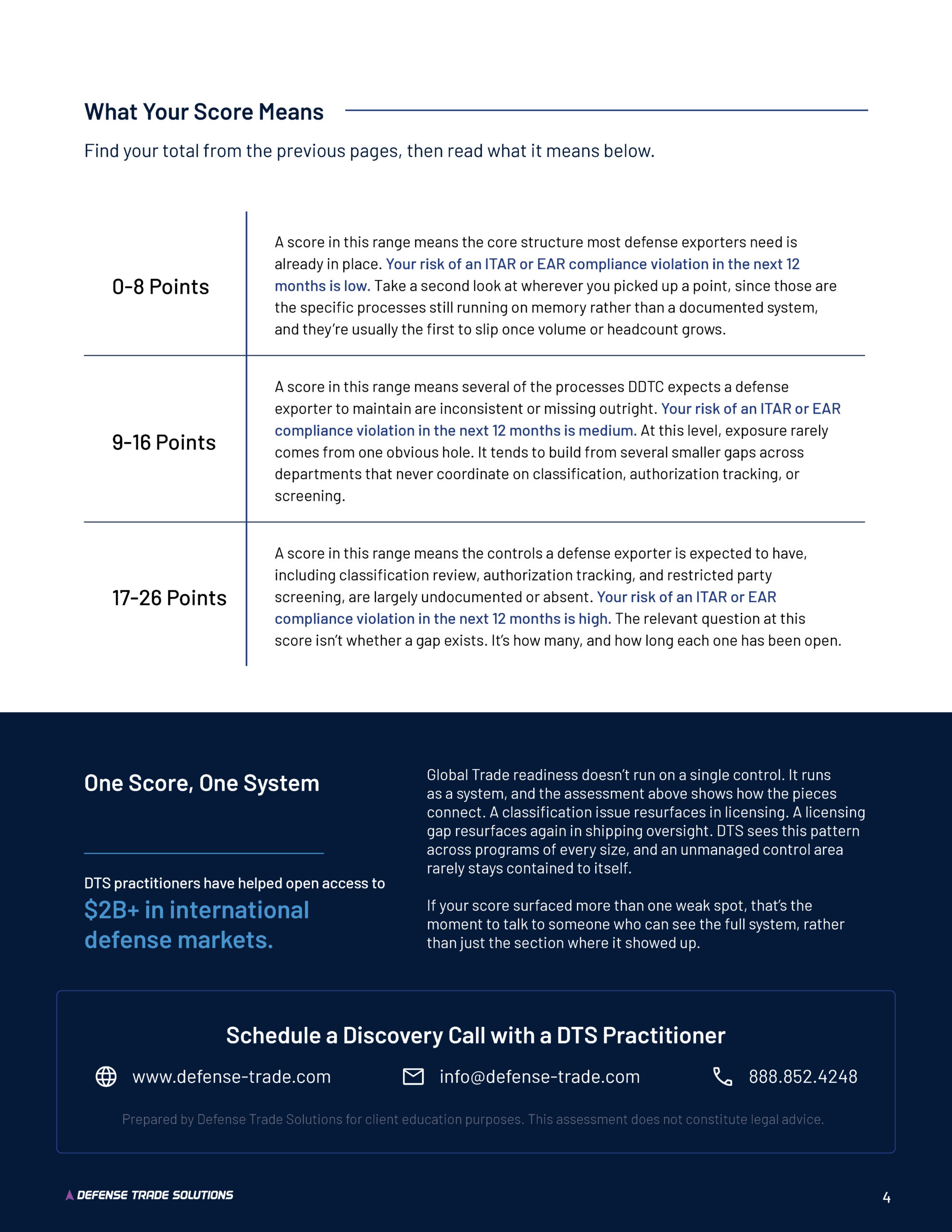
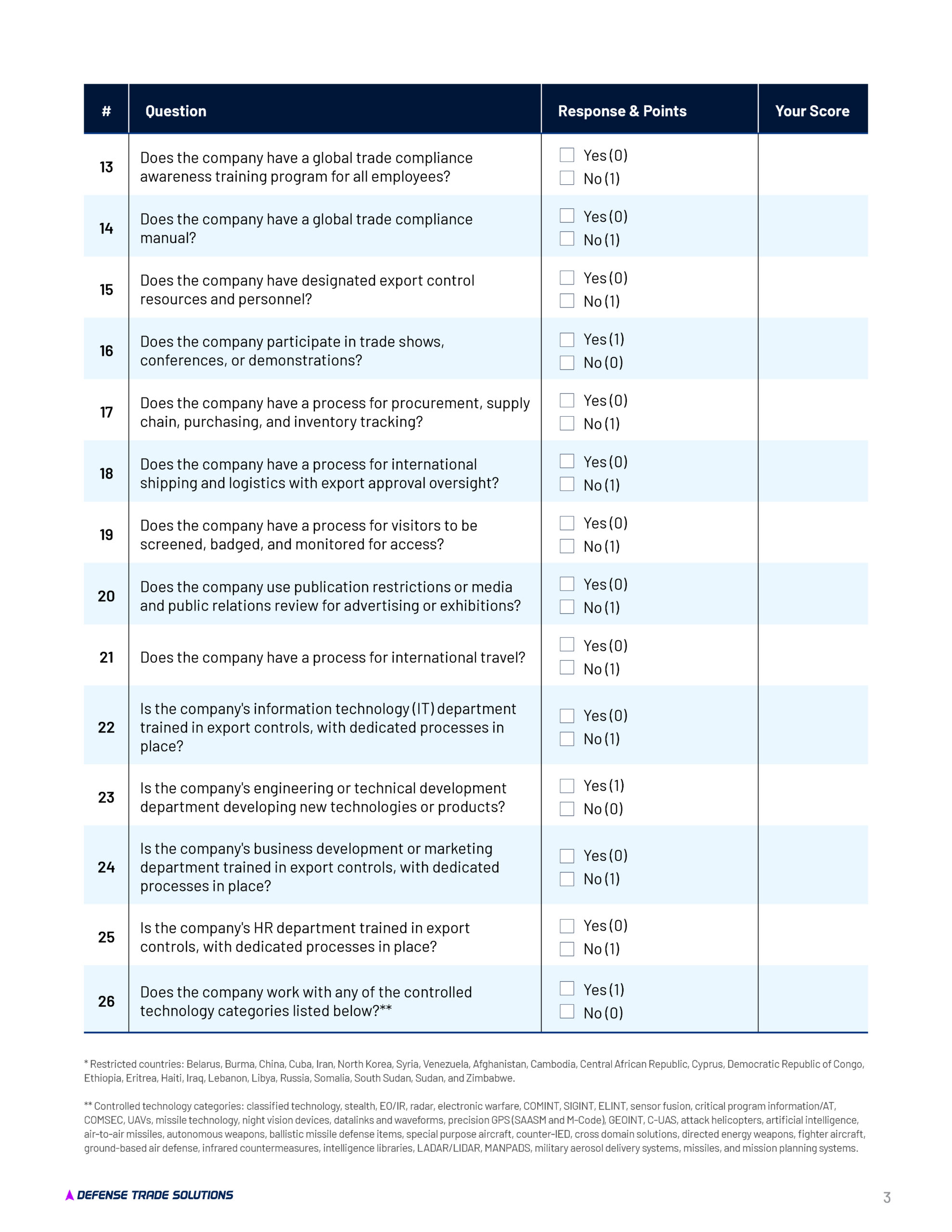
This assessment moves through five specific areas where international defense programs typically break down.
Who it’s for

These aren't academic questions. DTS practitioners have spent years diagnosing these exact patterns across mid-market defense programs.
Get your global trade readiness scoreDisclaimer: Prepared by Defense Trade Solutions for client education purposes. This assessment does not constitute legal advice.